How to Build Concrete Raised Garden Beds Using Reusable Plastic Molds

Cover and Leave to Cure

I set the new castings on a thick plastic sheet on the floor of my shop. I wrap the plastic up and over the top of the concrete panels like I was wrapping a present.
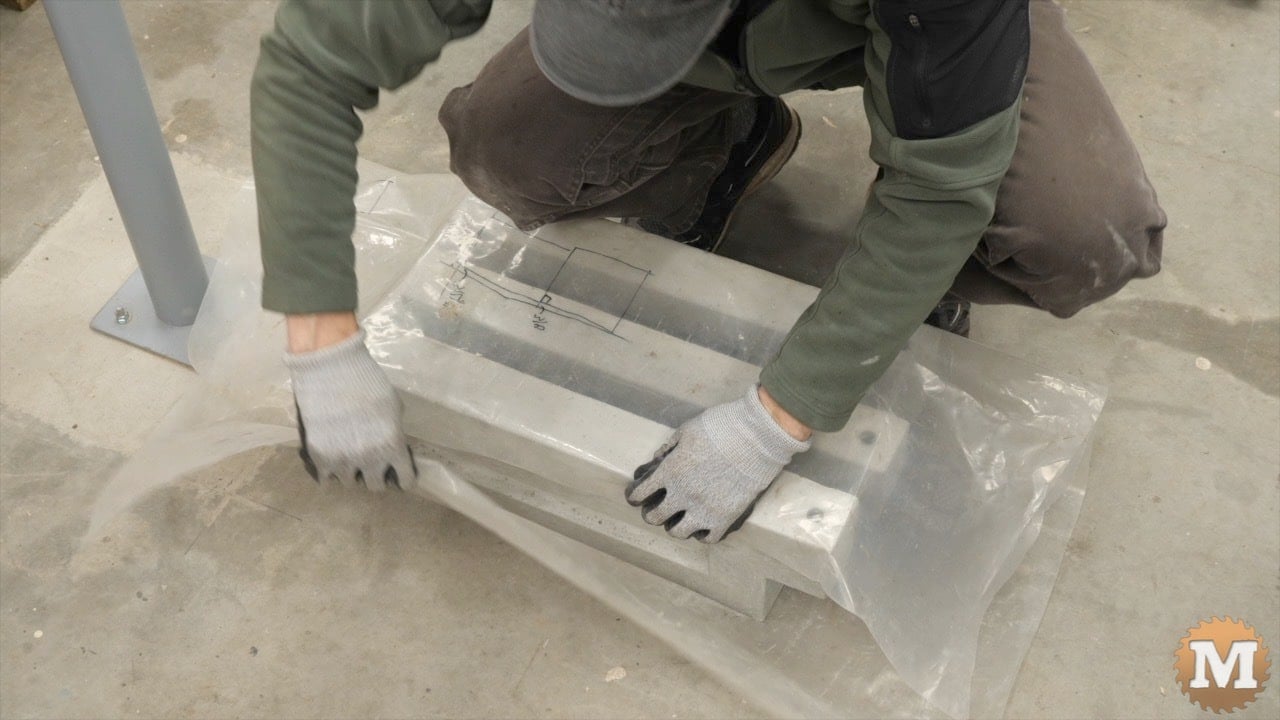
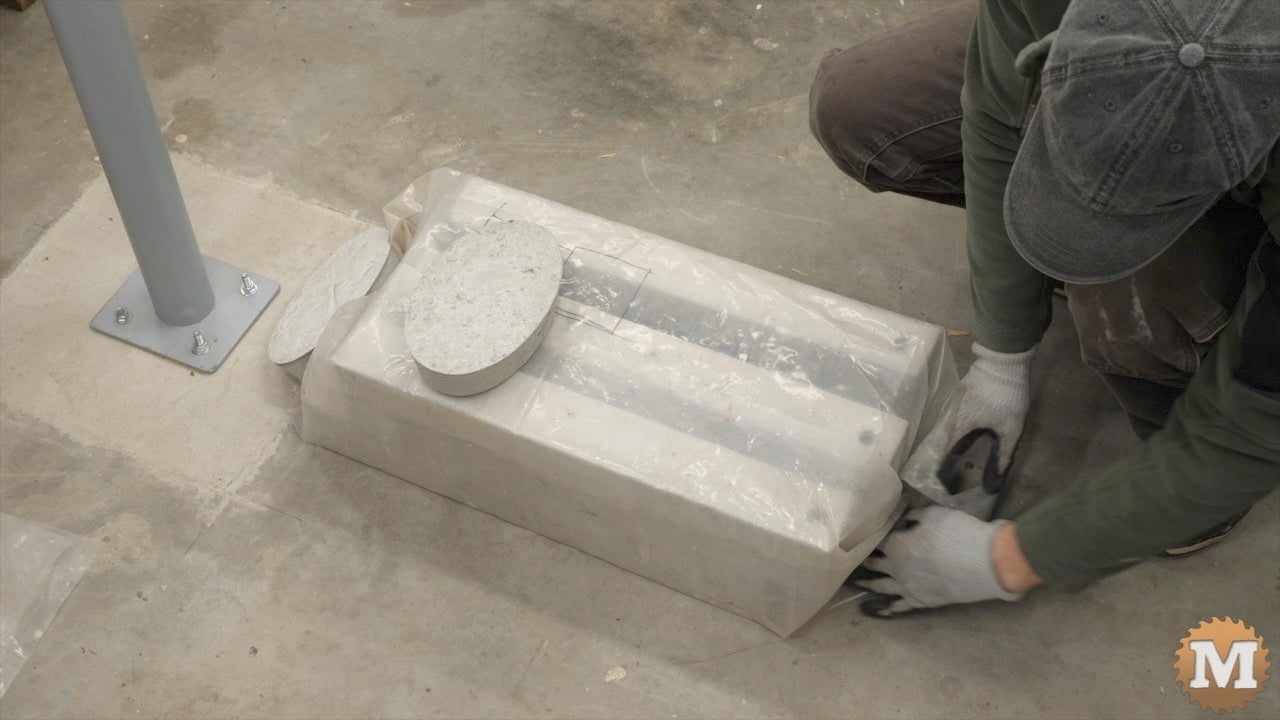
wrapping the wet concrete panels in thick plastic to slow the drying process
the fresh concrete panels are left to cure on the floor of my shop

This will hold in the moisture so they don’t dry too quickly. After a few days (or up to a week) I then pull them back up on the bench or set them over sawhorses outside.

Dressing the Concrete Edges

The vacuum forms have a small radius at the top edge and this can leave a bump on the casting when filled right to the top.
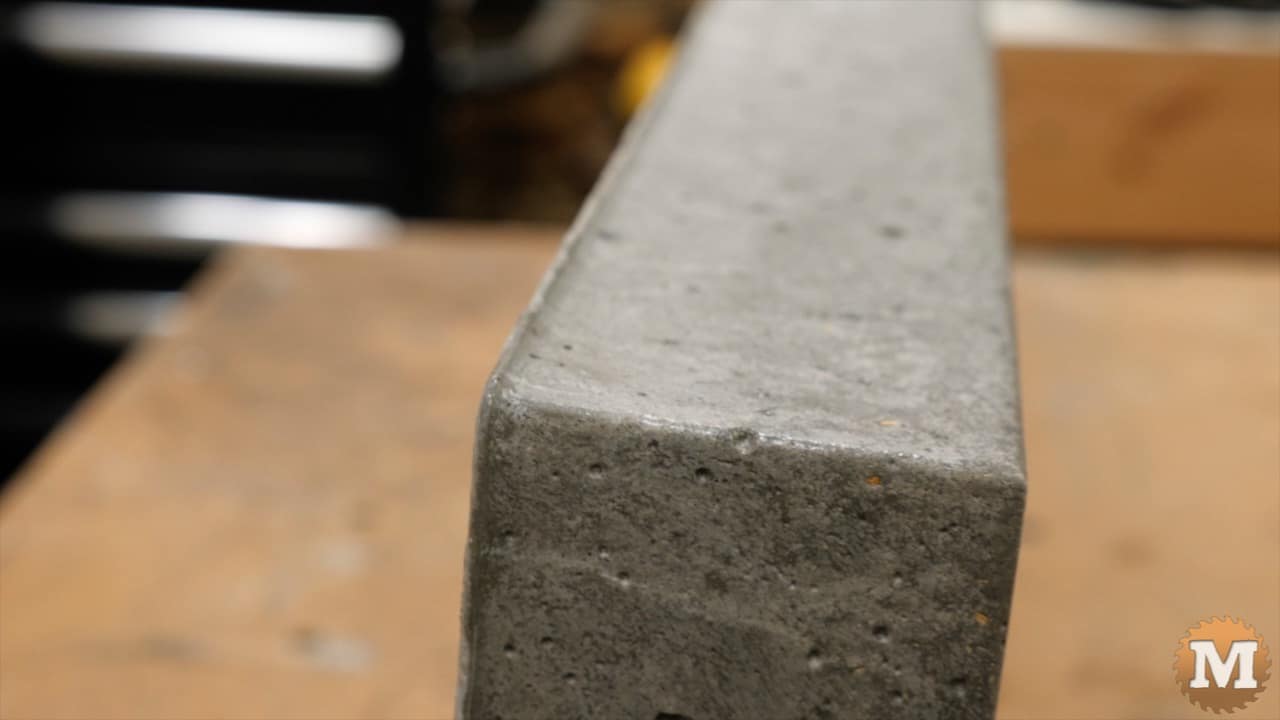
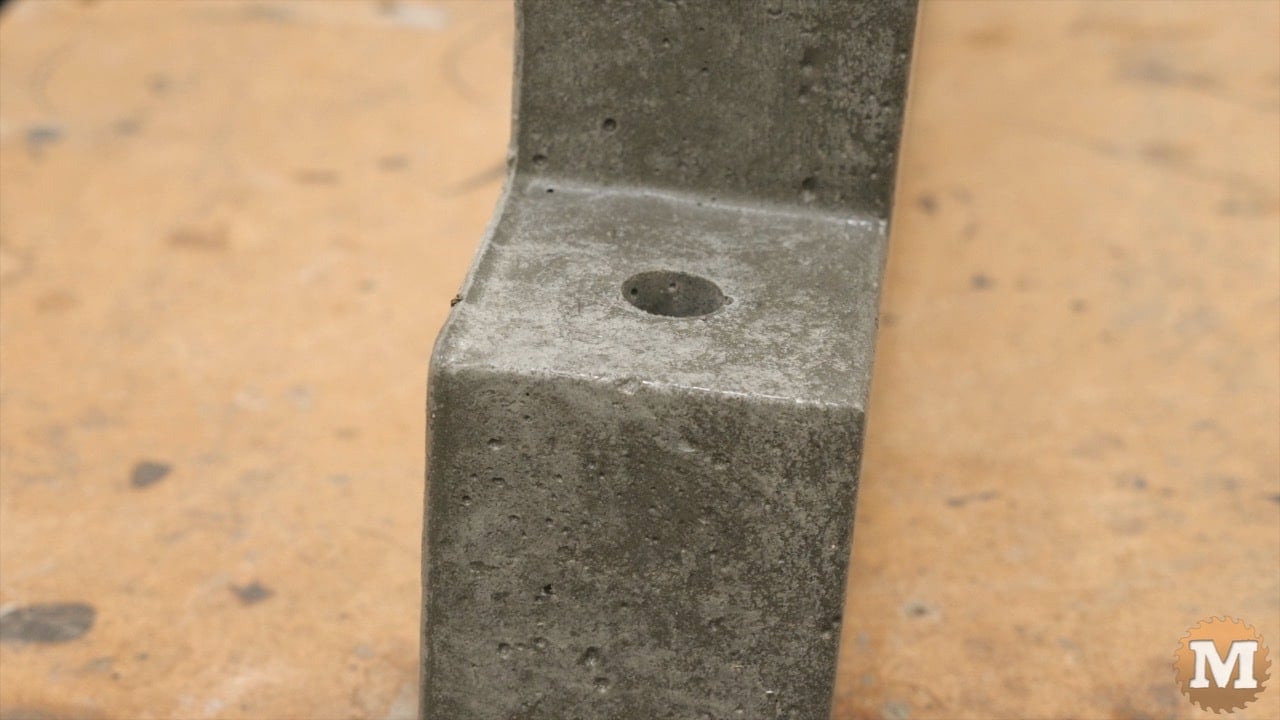
an edge on the concrete casting caused by the corner radii on the vacuum formed mold
the molds can cause this sharp(ish) edge on the casting
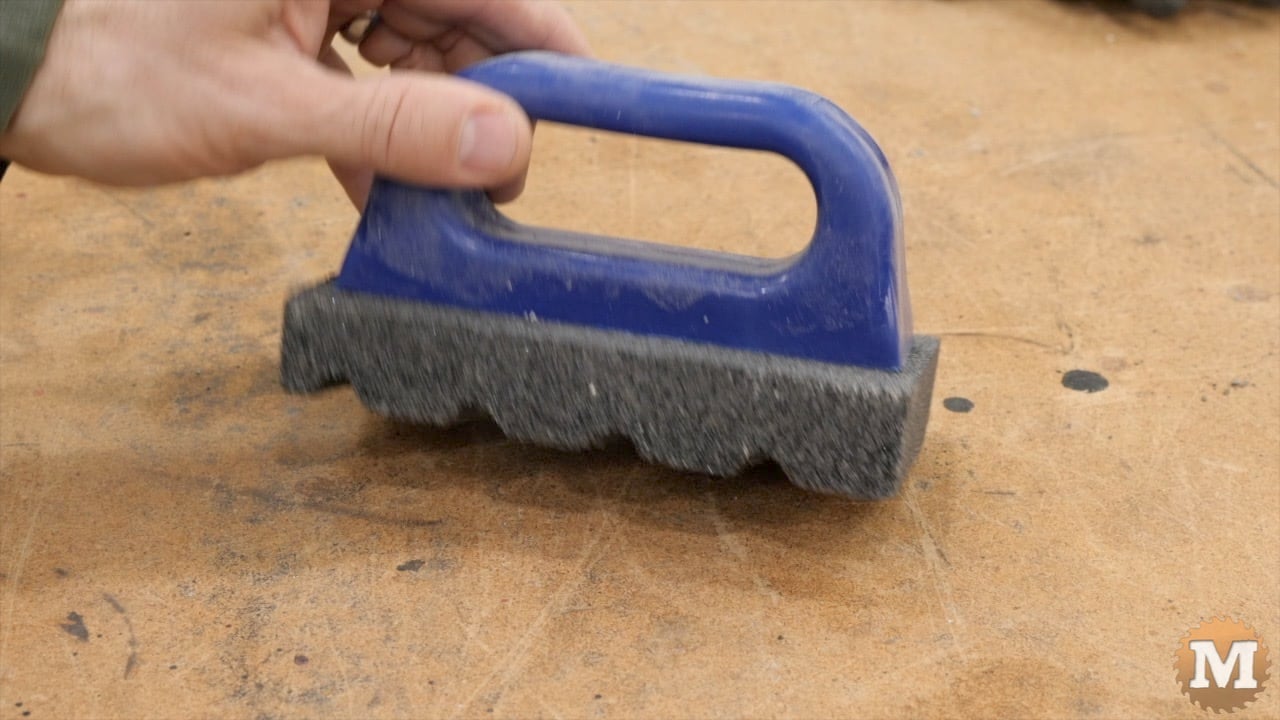
a concrete rub brick tool with a blue plastic handle

After a week of curing this edge can be removed, or dressed, with a concrete rub brick. This will ensure your panels have no sharp edges.

a rub brick with a plastic handle is used to smooth the sharp edges of the concrete casting

This only takes a few minutes and it’s important to ensuring they fit together properly when assembling the garden box. I use the smooth side of the rub brick when working around the ends and holes in the casting. I want that inside corner to be sharp and free of any excess concrete.
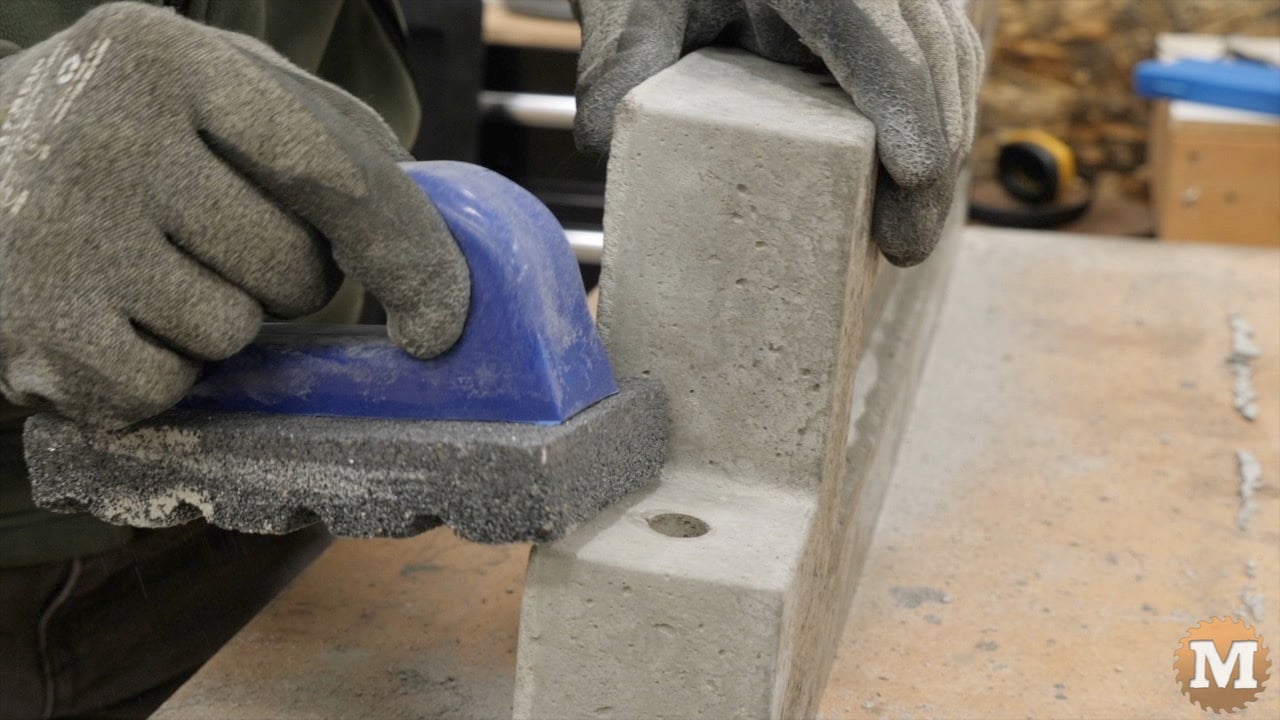
using the smooth edge of a concrete rub brick tool to dress the castings

Alternatively, you could use a small concrete or masonry brick for this.

Casting the 24″ Panels

The process is identical for the 24 inch panels.

applying food grade mineral oil to the abs plastic mold
sliding the oiled pipes into the holes in the form
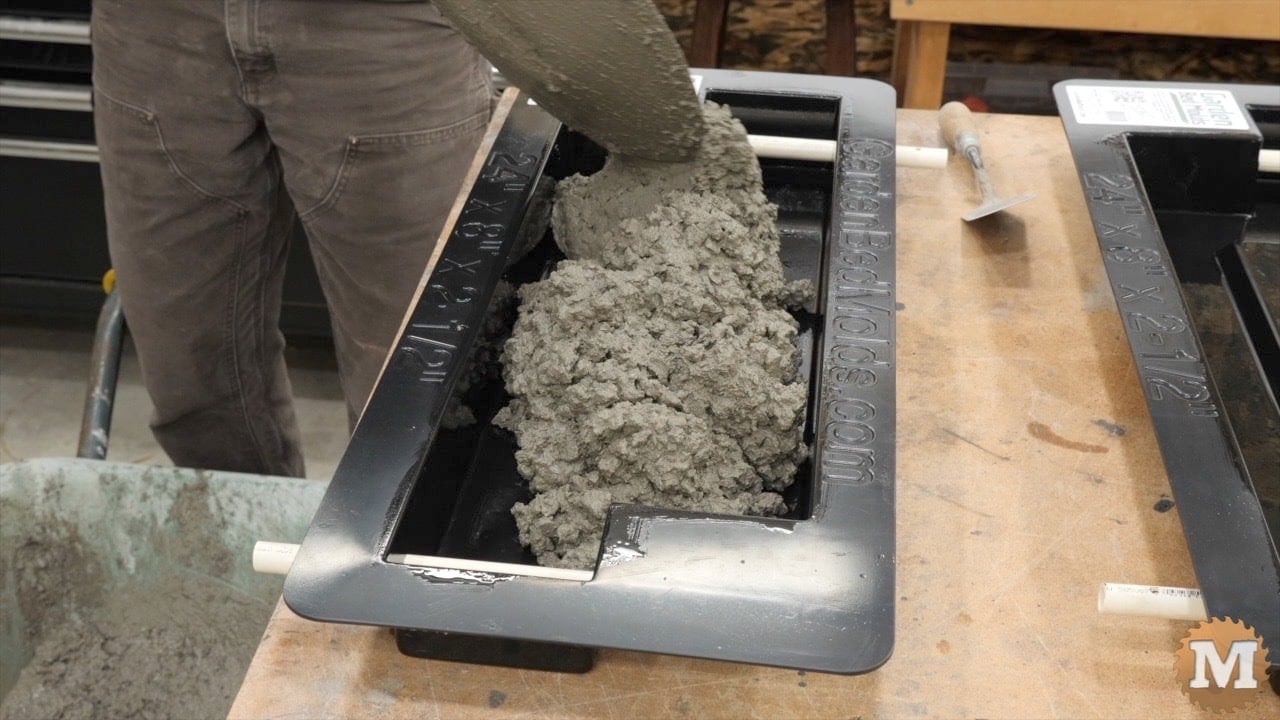
shovelling wet concrete into the 24" form
shovelling wet concrete into the 24″ form
a gentle side to side twist and shake settles the wet concrete into the corner of the plastic form

Again I oil the cavity and pipes, slide them into place, mix some concrete and fill the molds half way, settle the concrete then top them up.

tapping the bench with a rubber mallet to settle the wet concrete mix
toping the mold with a few more shovels of wet concrete mix
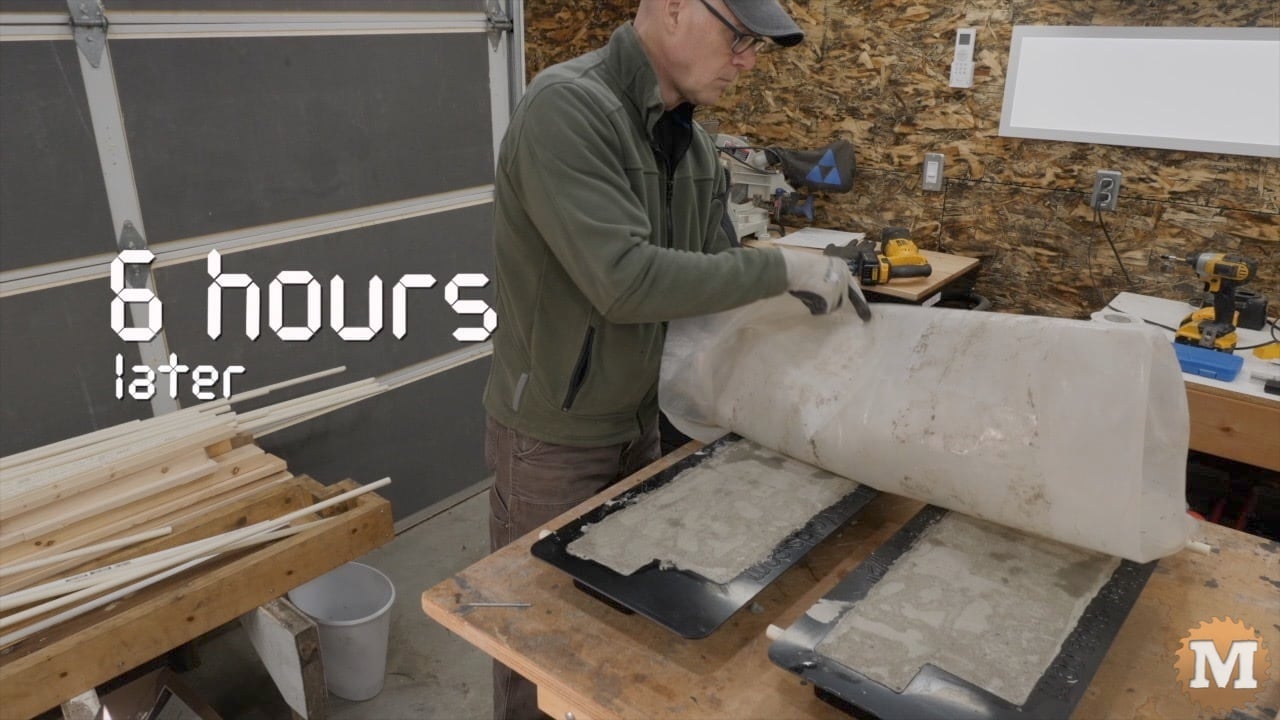
uncovering the concrete after 6 hours
removing the plastic pipes from the solidified concrete casting

After 6 hours the pipes are extracted and the concrete is covered and left to harden further for a couple of days before dressing edges.

(Disclaimer: As an Amazon Associate I earn from qualifying purchases. Thank you for helping to support my content this way. )

covering the concrete with sheets of plastic to slow drying
uncovering the molds after two days in the warm shop
lifting the mold from the ends with hands underneath and gripping the lapped ends
rotating the loaded plastic mold while maintaining contact with the work bench

And I think I slightly overfilled these 24″ forms. Under filling by an eighth of an inch would be ideal.

The only thing to note is that the 24 inch panels can take a bit longer to unmold. The shorter mold length reduces the natural flex of the plastic. So it can take a bit more patience to free the castings.

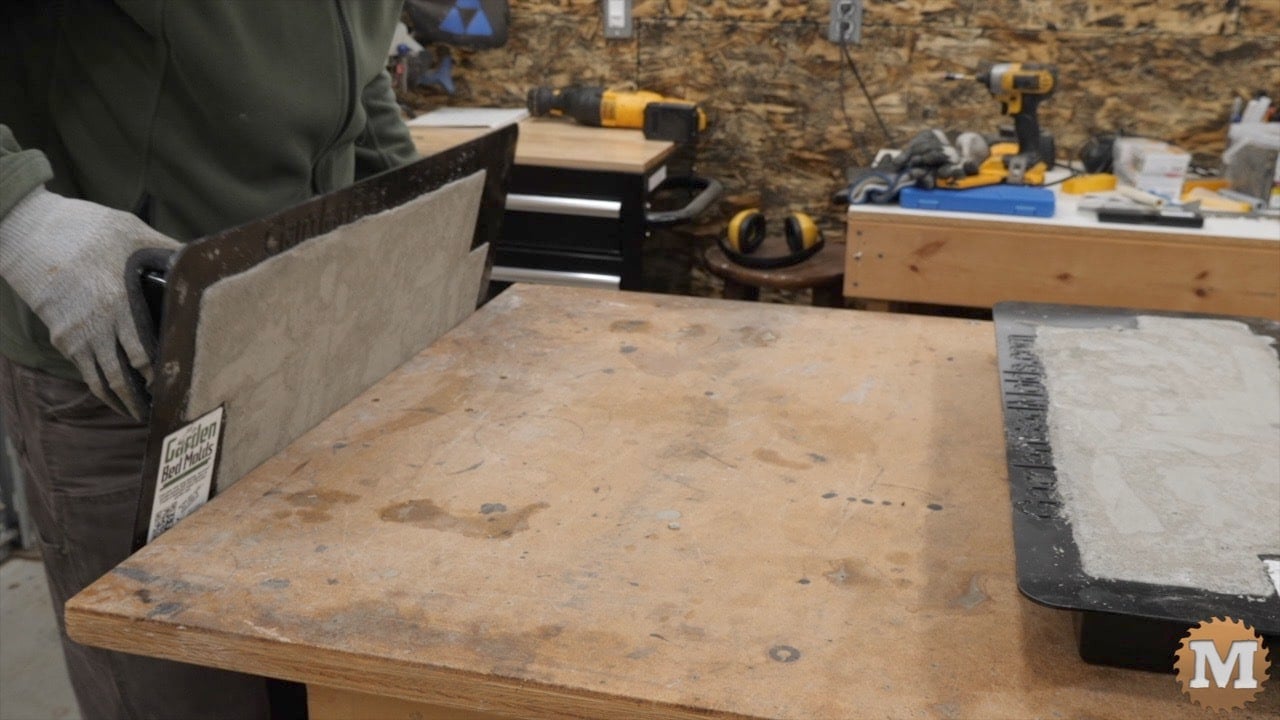
apply an alternating lifting technique to free the concrete casing from the plastic mold
unmolding a poured concrete casting that's 24" long
unmolding a poured concrete casting that’s 24″ long
wiping excess mineral oil from the new concrete castings with a clean dry cloth

I really like the smooth finish you get from casting in these plastic molds. I have noticed a few more surface bubbles in some places though. I’m speculating that wood molds are porous so trapped air has somewhere to go where the plastic is a solid barrier to any air movement.


Shopping Cart
Scroll to Top